-
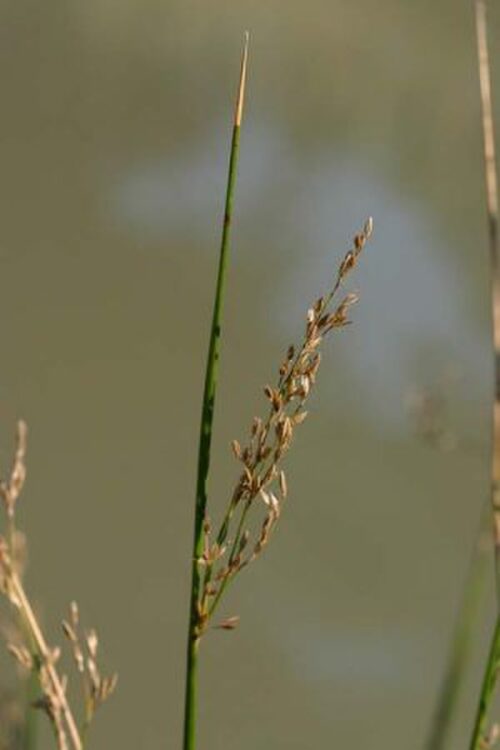 Mexican Rush (Juncus mexicanus), a bunchgrass with green & brown flowers
 -
 A fragrant high-country mint with lavender-purple pom-pom flowers that swarm with native bees and butterflies all summer.
 -
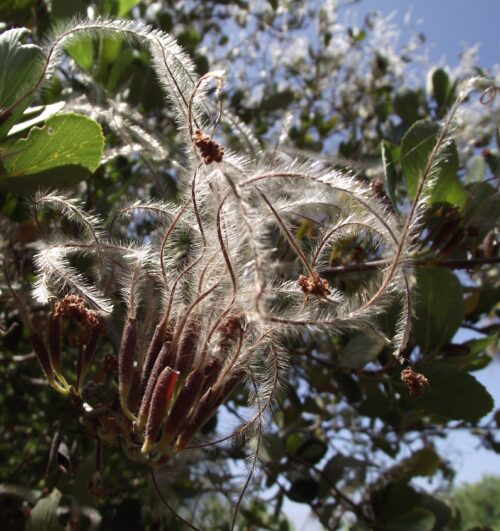 Mountain Mahogany (Cercocarpus betuloides), a shrub with cream flowers
 -
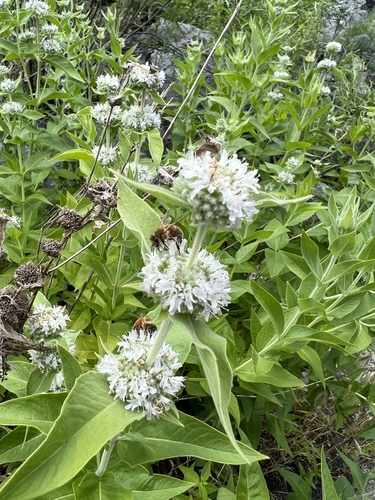 Mountain Mint (Pycnanthemum californicum), a perennial with white & purple flowers
 -
The rare fragrant penstemon — big balloon-like pale-pink flowers that actually smell sweet, on dramatic tall spikes.
-
The hardiest of the showy agaves — tight artichoke rosettes of blue-gray leaves that take cold to ~-5°F, far colder than most.
-
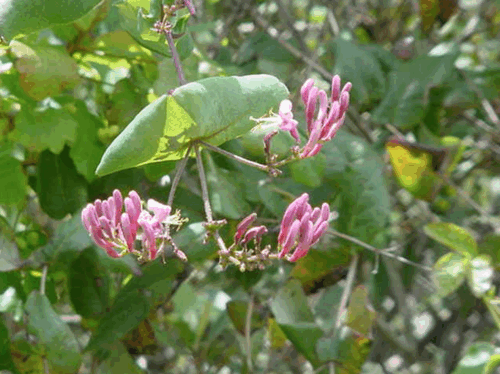 Pink Southern Honeysuckle (Lonicera hispidula var. vacillans) A charming selection of our CA native honeysuckle. If you grow honeysuckle-- please grow native! Japanese honeysuckle is an invasive species in our ecosystem. This species is special as well, it's flower shape and leaves are very unique! It's one of the few native vines that we have and it can spread up to 20' wide!
 -
Out of stock
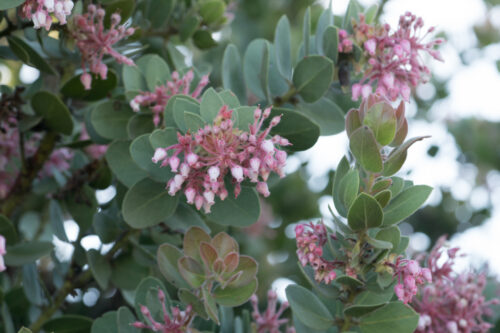 Pringle Manzanita (Arctostaphylos pringlei), a shrub with pink & white flowers
 -
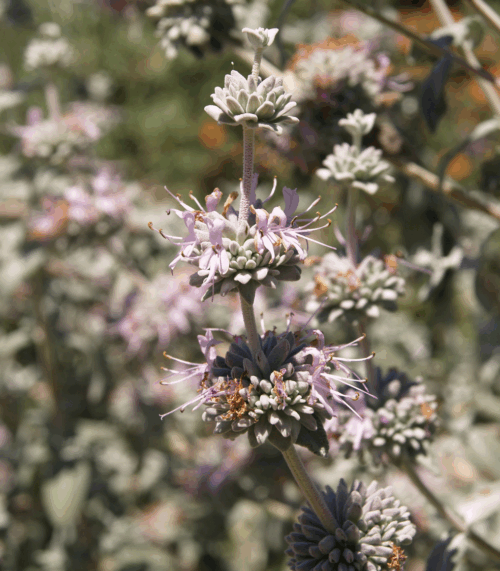
Salvia leucophylla
Purple Sage is commonly found growing on dry, rocky slopes and hillsides along the southern California coast. It forms a large, spreading shrub that reaches 3 to 5 all around, sometimes growing even wider in coastal conditions. In spring, it blooms with whorls of pale purple to rose pink flowers on long inflorescences that hummingbirds cherish. Flowers are not typically a true purple color as the common name may imply. New foliage can have hues of green, before turning a soft grey color and then shrinking and turning silver-grey during the summer months. Plant in full sun to light shade inland. Summer deciduous so it should be watered sparingly over the summer (twice per month) or left to go dormant. Provides erosion control on slopes where it can tolerate clay soil. Prune lightly after flowering to maintain a more compact form. Flowers attract a variety of insects and butterflies, and seeds provide food for native birds. -
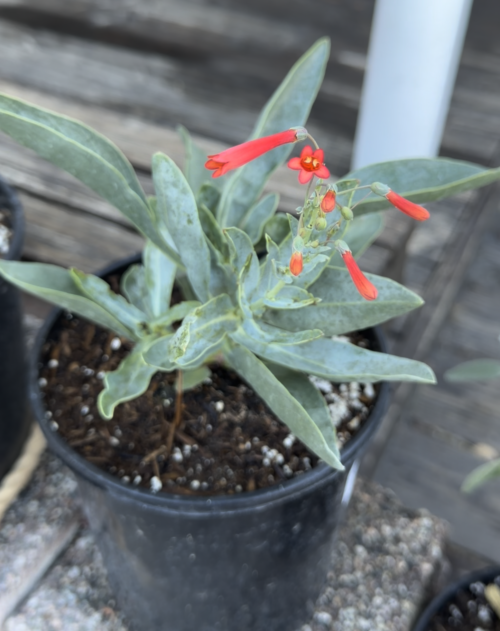 Scarlet Bugler (Penstemon centranthifolius), a shrub with scarlet red flowers
 -
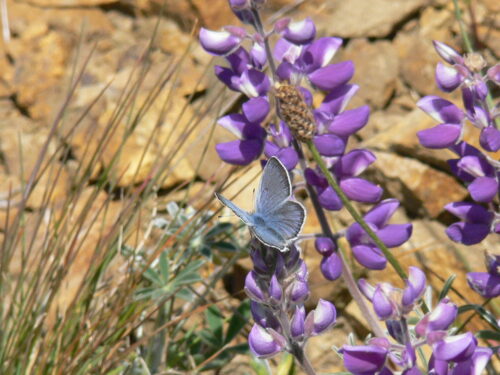 Silver Lupine (Lupinus albifrons), a shrub with blue & purple flowers
 -
A supremely tough, cold-hardy sumac (to -25°F) for mountain and high-desert gardens — fragrant lobed leaves with fiery red-orange fall color and tart red 'lemon
Call Us Today! 1-657-217-2109

CA Native Plant Garden Designs, Plants, & Tours