-
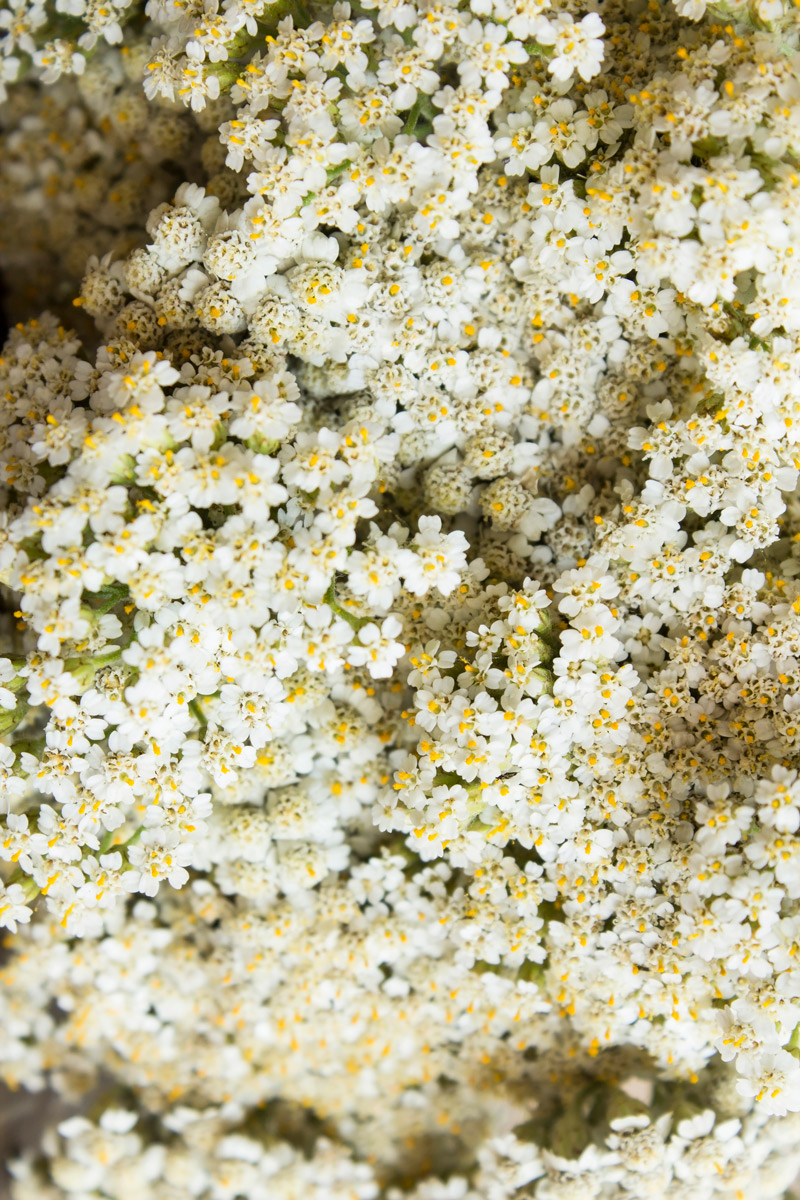 Yarrow is an all-star, popular plant choice among California native gardeners, including beginners! It is durable and easy to grow in a wide range of soil types and has low moisture requirements. It reseeds and spreads quickly, making it a good groundcover plant for lawn replacement.
 -
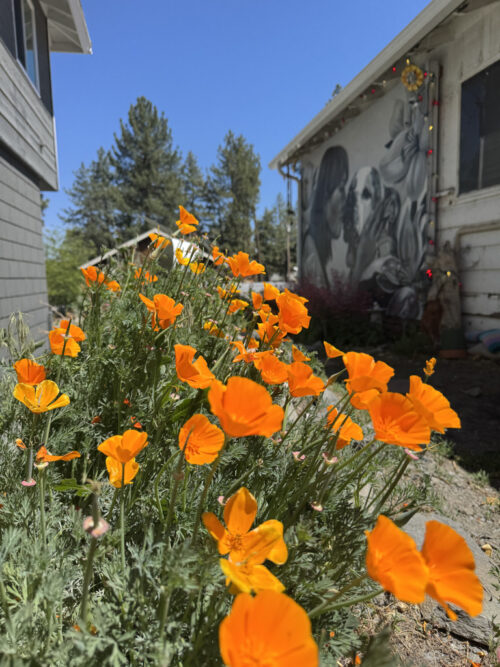 California Poppy (Eschscholzia californica), a low groundcover with orange & gold flowers
 -
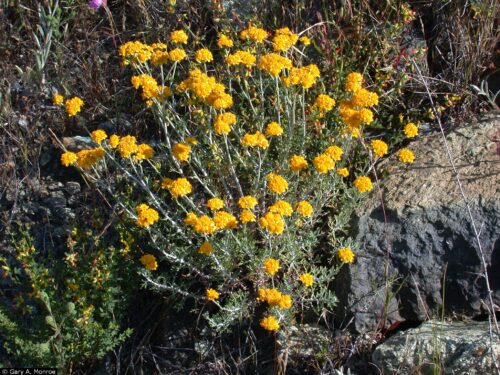 Golden Yarrow (Eriophyllum confertiflorum), a perennial with golden yellow flowers
 -
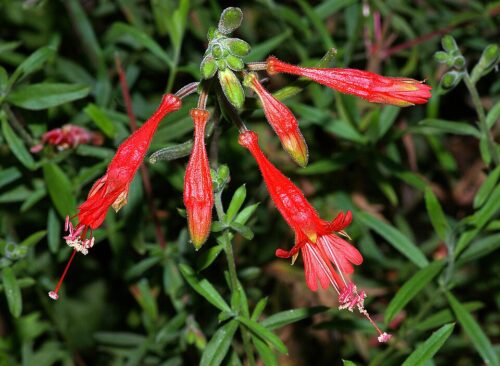 California Fuchsia (Epilobium canum), a low groundcover with scarlet red flowers
 -
 Long, lush spikes of blue-purple pea flowers rise above green palmate leaves, blooming generously spring into summer.
 -
One of the very best evergreen groundcovers for dry shade under oaks — glossy aromatic leaves on burgundy stems that smell of wine after rain, with rose-red lat
-
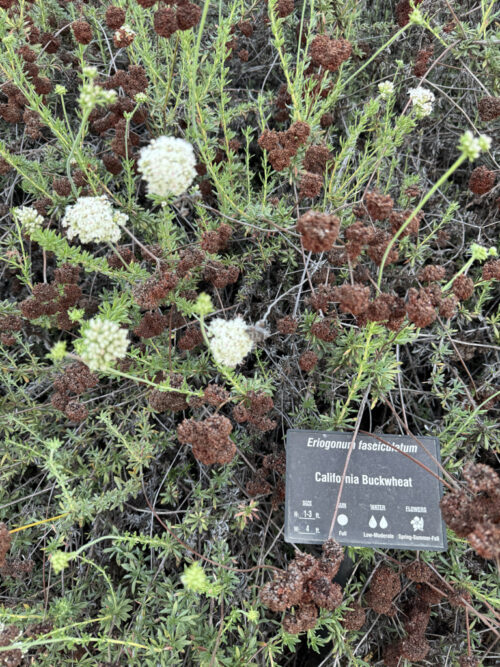 CA Buckwheat (Eriogonum fasciculatum) is one of the most hardy, drought resistant, and wildlife supporting plants you can add to your space! With beautiful white blooms that age to pink, maroon, rust, then brown, and foliage that looks like little pine needles, it is a gorgeous addition.
 -
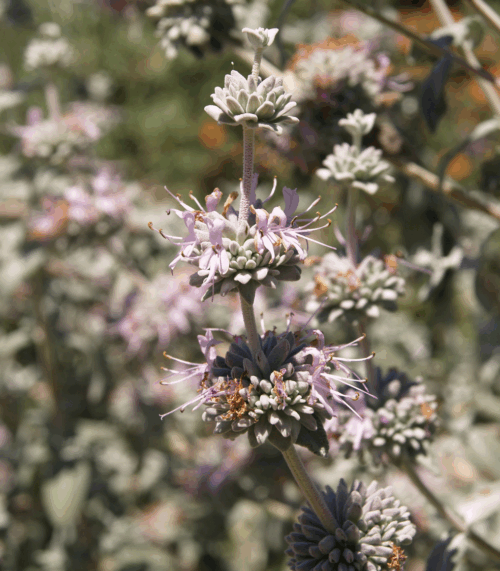
Salvia leucophylla
Purple Sage is commonly found growing on dry, rocky slopes and hillsides along the southern California coast. It forms a large, spreading shrub that reaches 3 to 5 all around, sometimes growing even wider in coastal conditions. In spring, it blooms with whorls of pale purple to rose pink flowers on long inflorescences that hummingbirds cherish. Flowers are not typically a true purple color as the common name may imply. New foliage can have hues of green, before turning a soft grey color and then shrinking and turning silver-grey during the summer months. Plant in full sun to light shade inland. Summer deciduous so it should be watered sparingly over the summer (twice per month) or left to go dormant. Provides erosion control on slopes where it can tolerate clay soil. Prune lightly after flowering to maintain a more compact form. Flowers attract a variety of insects and butterflies, and seeds provide food for native birds. -
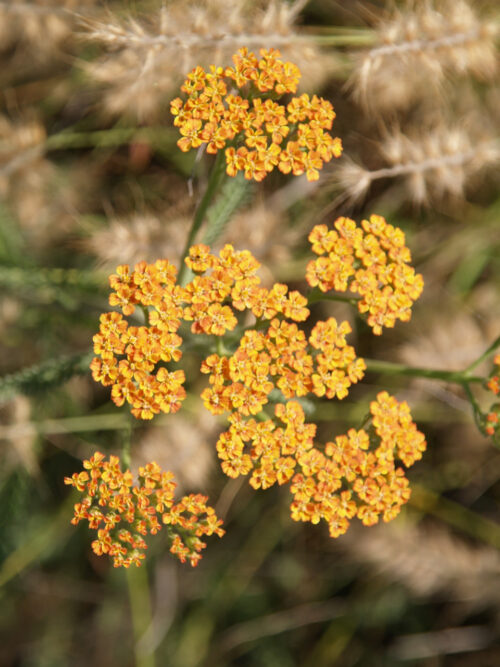 Tolerates coastal exposure. For use in cottage gardens, perennial beds, cut flowers, in mass. Deer resistant. Foliage height 4-8" tall, flower stalks can reach 3 feet. Aggressiveness/spreading capability depends on climate. In warmer areas, tends to stay abut 12-18"W, but in cold climate (with snow) will spread fairly aggressively 2-3 feet. Can divide every few years if center of the plant is less vigorous or begin to die out.
 -
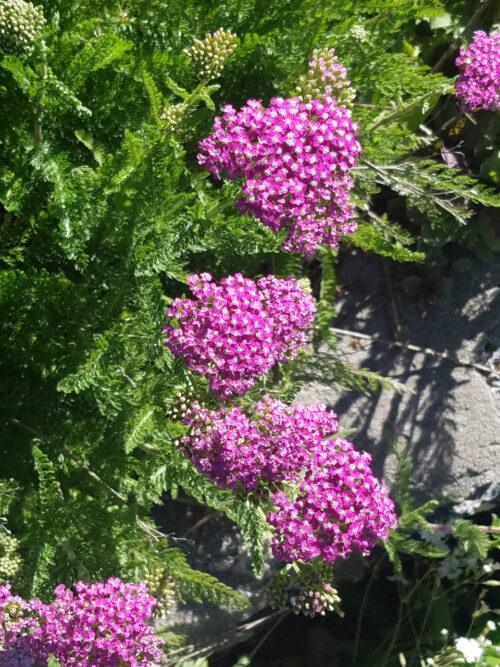 Tolerates coastal exposure. For use in cottage gardens, perennial beds, cut flowers, in mass. Deer resistant. Foliage height 4-8" tall, flower stalks can reach 3 feet. Aggressiveness/spreading capability depends on climate. In warmer areas, tends to stay abut 12-18"W, but in cold climate (with snow) will spread fairly aggressively 2-3 feet. Can divide every few years if center of the plant is less vigorous or begin to die out.
 -
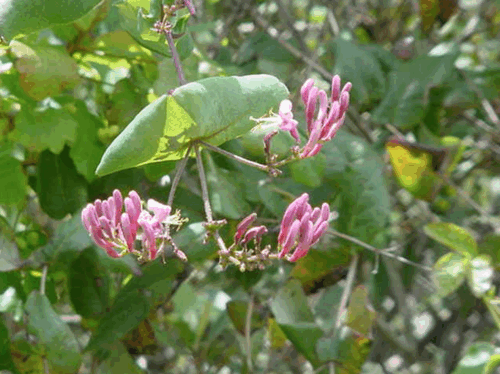 Pink Southern Honeysuckle (Lonicera hispidula var. vacillans) A charming selection of our CA native honeysuckle. If you grow honeysuckle-- please grow native! Japanese honeysuckle is an invasive species in our ecosystem. This species is special as well, it's flower shape and leaves are very unique! It's one of the few native vines that we have and it can spread up to 20' wide!
 -
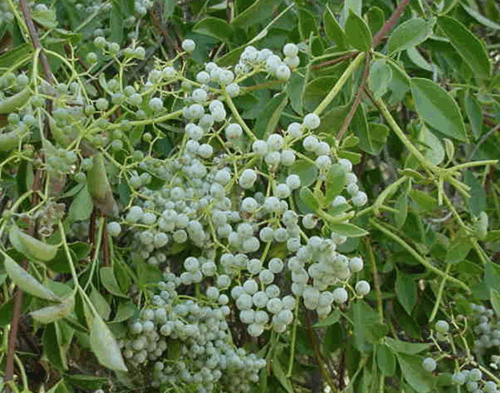 Blue Elderberry Attractive, hardy, and easy to grow, the Blue Elderberry is also an important food source for California wildlife. In spring, large clusters of cream-colored flowers attract butterflies and bees. The abundant blue berries provide food for birds and other animals. Humans can eat the fruit as long as it's cooked.
Call Us Today! 1-657-217-2109
CA Native Plant Garden Designs, Plants, & Tours