-
Out of stock
 Glowing apricot-orange cups bloom much of the year on silvery desert foliage — a low-desert and high-desert native that thrives on heat, lean soil, and almost n
 -
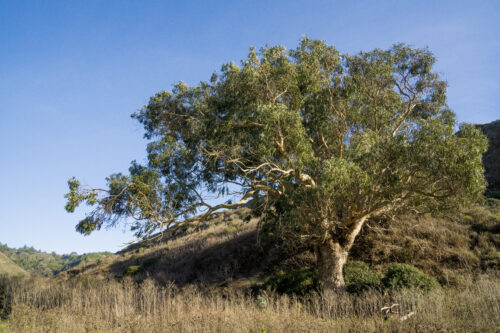 Arroyo Willow (Salix lasiolepis), a shrub with silvery catkins flowers
 -
A fast, dense gray-green shrub that makes a superb desert screen or windbreak and may attract more birds than anything else you plant.
-
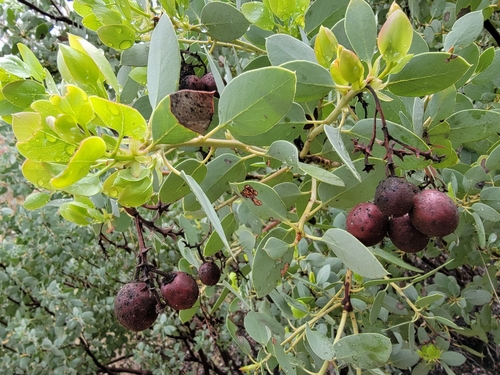 Bigberry Manzanita (Arctostaphylos glauca), a shrub with pale pink & white flowers
 -
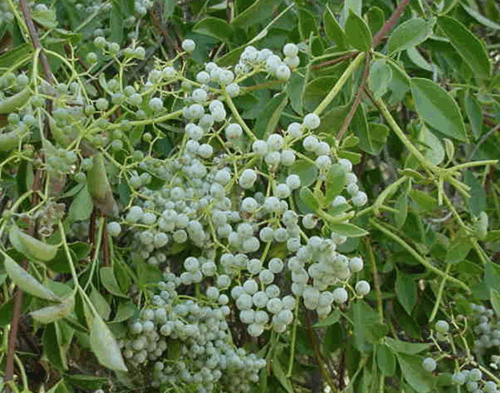 Blue Elderberry Attractive, hardy, and easy to grow, the Blue Elderberry is also an important food source for California wildlife. In spring, large clusters of cream-colored flowers attract butterflies and bees. The abundant blue berries provide food for birds and other animals. Humans can eat the fruit as long as it's cooked.
 -
A charming, ultra-hardy native bunchgrass (good to -30°F) with whimsical horizontal 'eyebrow' seed heads in summer.
-
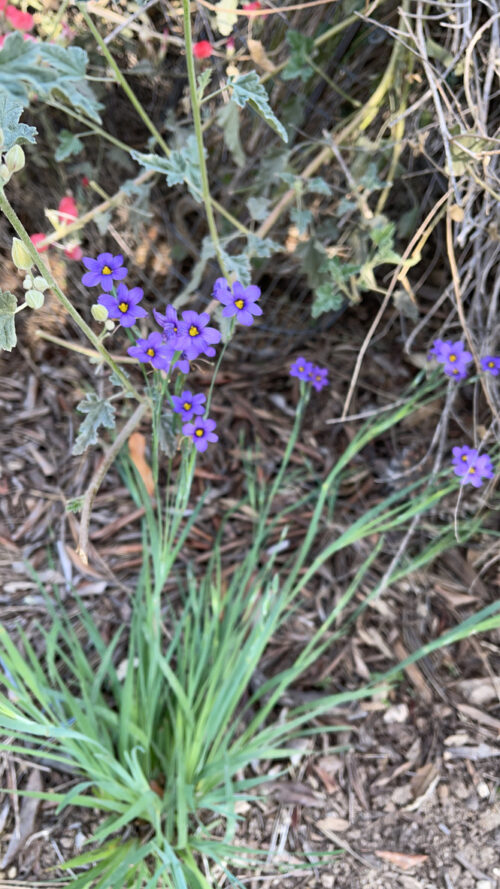 Blue-eyed Grass (Sisyrinchium bellum), an ornamental grass with blue & purple flowers
 -
Out of stockClusters of starry blue-lavender flowers with golden centers bloom much of the year, buzz-pollinated by native bees.
-
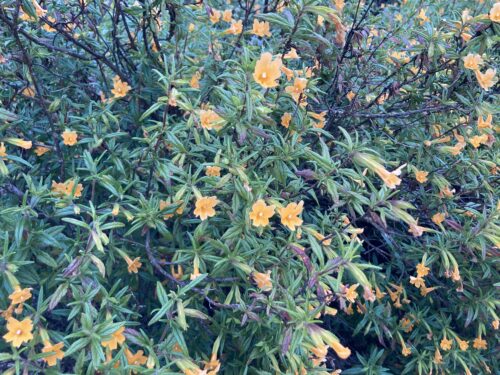 Bush Monkeyflower (Diplacus aurantiacus), a shrub with orange & apricot flowers
 -
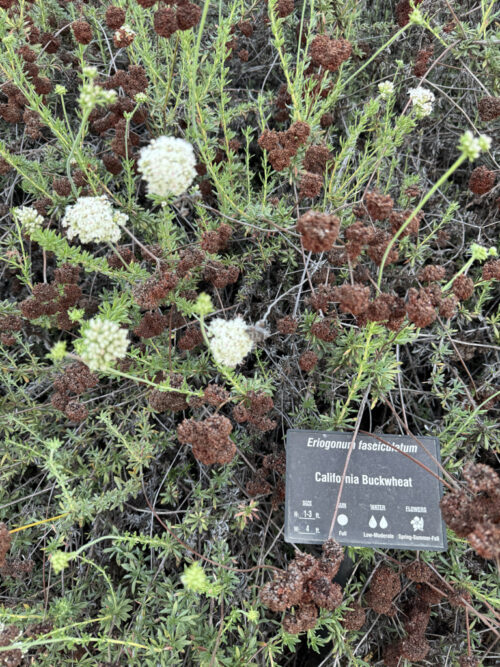 CA Buckwheat (Eriogonum fasciculatum) is one of the most hardy, drought resistant, and wildlife supporting plants you can add to your space! With beautiful white blooms that age to pink, maroon, rust, then brown, and foliage that looks like little pine needles, it is a gorgeous addition.
 -
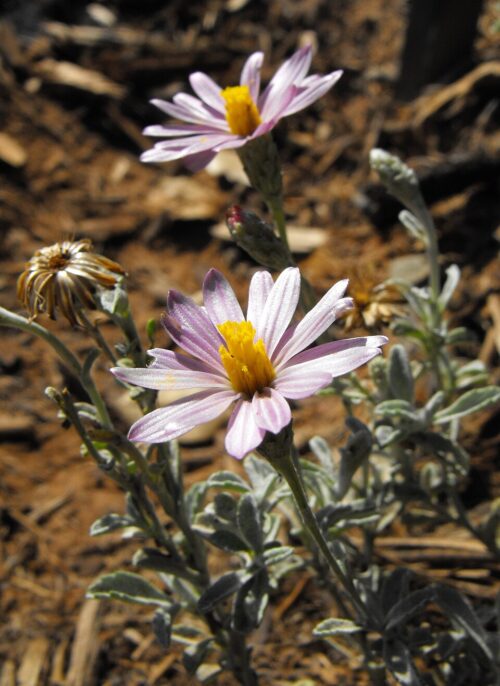 California Aster (Corethrogyne filaginifolia), a low groundcover with lavender & pink flowers
Call Us Today! 1-657-217-2109
CA Native Plant Garden Designs, Plants, & Tours