
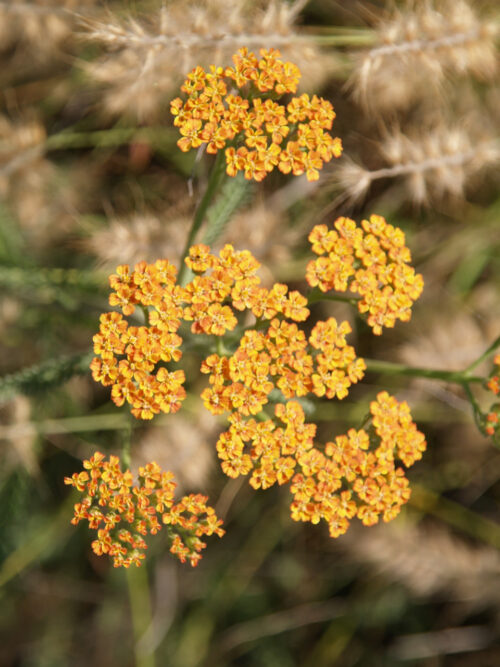
Tolerates coastal exposure. For use in cottage gardens, perennial beds, cut flowers, in mass. Deer resistant. Foliage height 4-8" tall, flower stalks can reach 3 feet. Aggressiveness/spreading capability depends on climate. In warmer areas, tends to stay abut 12-18"W, but in cold climate (with snow) will spread fairly aggressively 2-3 feet. Can divide every few years if center of the plant is less vigorous or begin to die out.
-
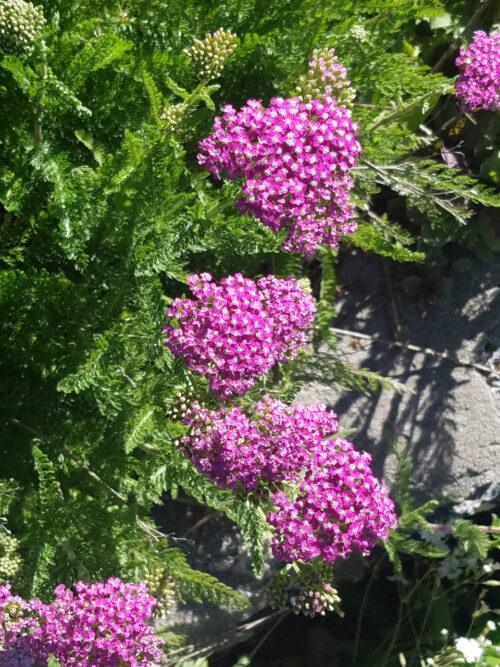 Tolerates coastal exposure. For use in cottage gardens, perennial beds, cut flowers, in mass. Deer resistant. Foliage height 4-8" tall, flower stalks can reach 3 feet. Aggressiveness/spreading capability depends on climate. In warmer areas, tends to stay abut 12-18"W, but in cold climate (with snow) will spread fairly aggressively 2-3 feet. Can divide every few years if center of the plant is less vigorous or begin to die out.
 -
 A fast-growing native shade tree for streamsides and wet ground, with smooth pale bark and dangling catkins in late winter.
 -
Long wands of blue-purple flowers bloom an astonishingly long season — spring clear into fall — on a tough, adaptable plant that shrugs off cold to -20°F.
-
A spectacular spring show — bare branches erupt in magenta-pink pea flowers before the heart-shaped leaves unfurl, followed by red seedpods and gold-red fall co
-
Glossy holly-like leaves, fragrant clusters of bright yellow spring flowers, and dusty-blue berries birds adore.
-
Soft creamy-yellow to apricot trumpets in long succession, beloved by hummingbirds and native bees.
-
A supremely tough, cold-hardy sumac (to -25°F) for mountain and high-desert gardens — fragrant lobed leaves with fiery red-orange fall color and tart red 'lemon
-
Shimmering silver foliage topped by fragrant purple-blue flower spikes — a true spring spectacle and a host plant for blue butterflies.
-
Tall, elegant spikes of brilliant scarlet tubular flowers bloom spring through early summer, drawing hummingbirds from across the garden.
-
Exquisite blue-and-white spurred flowers that nod above ferny foliage — a true alpine native hardy to -35°F, perfect for a shaded mountain garden bed.
-
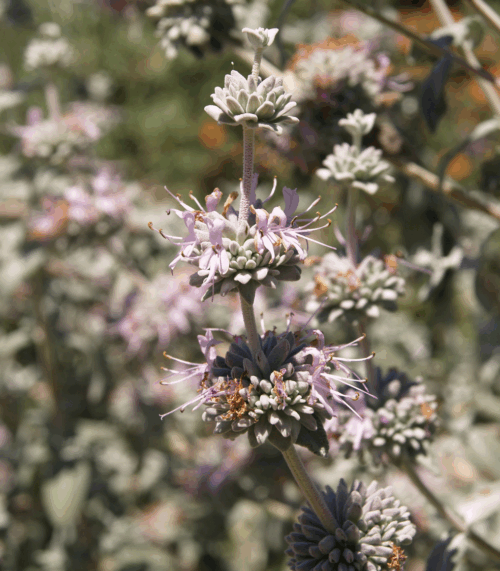
Salvia leucophylla
Purple Sage is commonly found growing on dry, rocky slopes and hillsides along the southern California coast. It forms a large, spreading shrub that reaches 3 to 5 all around, sometimes growing even wider in coastal conditions. In spring, it blooms with whorls of pale purple to rose pink flowers on long inflorescences that hummingbirds cherish. Flowers are not typically a true purple color as the common name may imply. New foliage can have hues of green, before turning a soft grey color and then shrinking and turning silver-grey during the summer months. Plant in full sun to light shade inland. Summer deciduous so it should be watered sparingly over the summer (twice per month) or left to go dormant. Provides erosion control on slopes where it can tolerate clay soil. Prune lightly after flowering to maintain a more compact form. Flowers attract a variety of insects and butterflies, and seeds provide food for native birds.